SANTA CLARITA, Calif. (AP) – A 6-year-old girl who spent most of her life with California foster parents was removed from the home under a court order that says her Native American blood requires her to live with relatives in Utah.
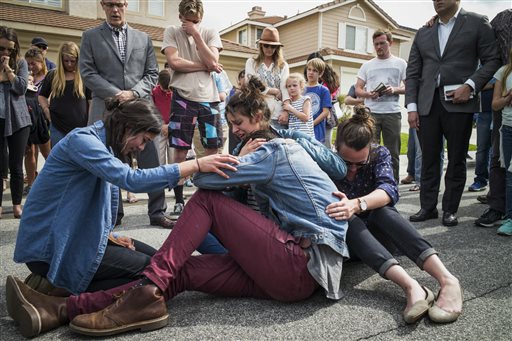
Lexi, who is 1/64th Choctaw on her birth father’s side, cried and clutched a stuffed bear as Rusty Page carried her out of his home north of Los Angeles to a waiting car Monday. Los Angeles County social workers whisked her away.
“How is it that a screaming child, saying, ‘I want to stay, I’m scared,’ how is it in her best interest to pull her from the girl she was before that doorbell rang?” he told KNX-AM radio.
His wife, Summer Page, screamed, “Lexi, I love you!” and a crowd of friends and neighbors cried, prayed or sang hymns.
The Pages had fought efforts under the federal Indian Child Welfare Act to place Lexi with relatives of her father, who is a Native American. The Pages argued that Lexi had lived with them since the age of 2 and knew no other life.
However, a court found that the Page family “had not proven by clear and convincing evidence that it was a certainty the child would suffer emotional harm by the transfer.”
The Pages have three children and want to adopt Lexi. The family is appealing and will go to the California Supreme Court if necessary, said their attorney, Lori Alvino McGill.

Lexi was 17 months old when she was removed from her birth parents’ custody. Her mother had substance abuse problems, and her father had an extensive criminal history, according to court records.
She will live with a Utah couple who are not Native Americans but are related by marriage to her father. The girl’s sister is living with the couple, and another sister will be living down the street, said Leslie Heimov of the Children’s Law Center of California, Lexi’s court-appointed legal representatives.
“The law is very clear that siblings should be kept together whenever they can be, and they should be placed together even if they were not initially together,” Heimov told the Los Angeles Daily News.
She said the girl and the Utah family had traded messages and monthly visits over the past three years.
“She has a loving relationship with them,” Heimov said. “They are not strangers in any way, shape or form.”
The National Indian Child Welfare Association said in a statement that the Pages were aware for years that the girl was an American Indian but chose to “drag out litigation as long as possible, creating instability for the child.”

The Choctaw Nation said it “desires the best for this Choctaw child.”
“The tribe’s values of faith, family and culture are what makes our tribal identity so important to us. Therefore we will continue to work to maintain these values and work toward the long-term best interest of this child,” the statement said.
Dozens of similar cases involving foster families have gone to court in multiple states stretching back to the passage of the Indian Child Welfare Act in the late 1970s.