View the player above to watch previous coverage.
COLUMBUS, Ohio (WCMH) — The first law enforcement agency to use therapy dogs in Ohio is now helping departments across the country establish their own programs.
The Franklin County Sheriff’s Office started a therapy dog program in 2017, after Deputy Darrah Metz urged the department to get its first therapy dog: Mattis K. Nine. Mattis was also the first law enforcement therapy dog in Ohio and the sixth in the nation.
“We have wonderful dogs that we use for the bad guys, whether it’s sniffing out drugs or bombs, explosives, suspect apprehension, tracking and trailing,” Metz said. “But we didn’t really have anything focused on the good guys, which are the people that we serve — victims of crime. So that’s how the therapy dogs all came about.”
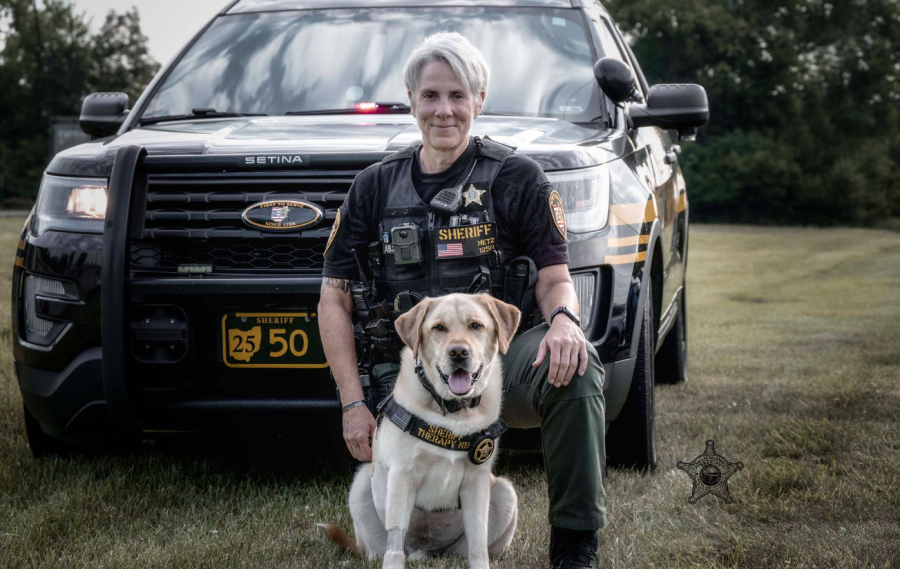
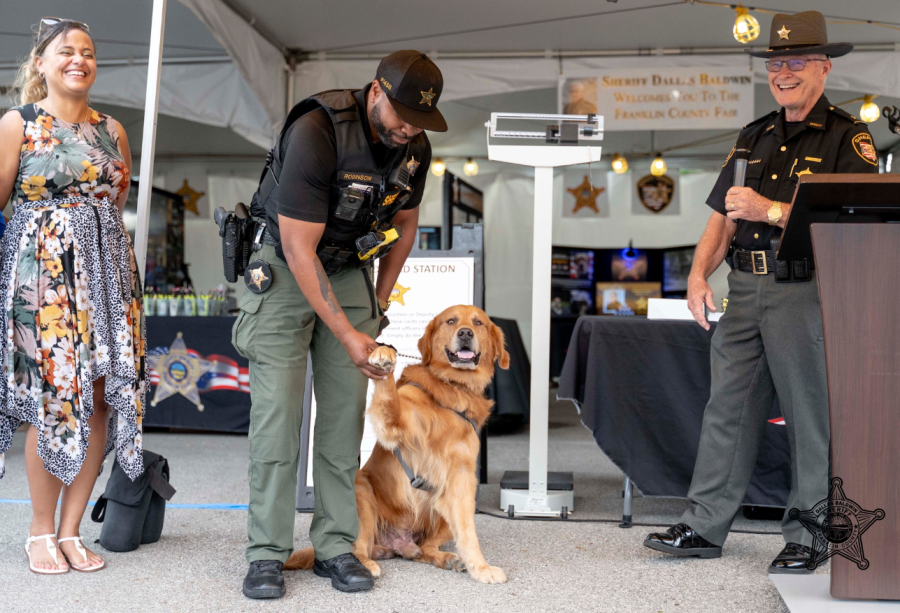
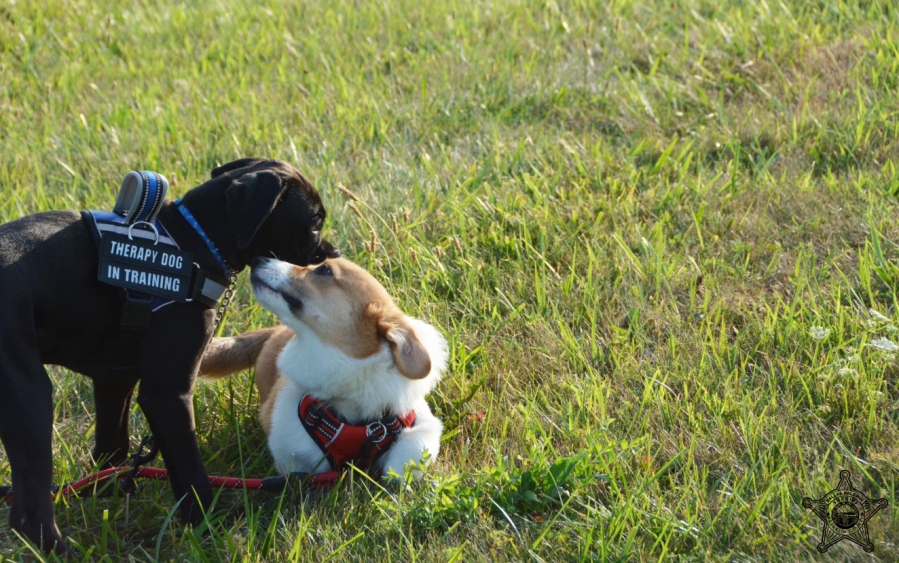
The sheriff’s office has one sworn-in therapy dog, Sunny, and two new puppies in training, Mando and Brook. Mattis died in late June. from end-stage liver failure, but his legacy lives on through the expanding program. In the beginning, Metz said Mattis was mostly used to help the sheriff’s office connect with the community – but an inquiry from the FBI changed the course of the program.
“The vast spectrum of their uses in the beginning, I would say, it was all public relations,” Metz said. “Six months in with Mattis, we got that one phone call from the FBI that asked us to assist the young victim who had witnessed his uncle’s murder, and that changed everything for us.”
Metz said while the sheriff’s office will always bring dogs to community events to interact with the public, their focus shifted to victim advocacy, mental health and trauma support.
In one instance, a Franklin County prosecuting attorney was attempting to interview an 8-year-old victim of sexual assault, who was having trouble communicating what had happened to her. After bringing Mattis in, she began to whisper the answers to the questions to the K-9, recounting two years of abuse.
“It really became an investigative tool, in the fact (that) these dogs were putting people at ease enough to tell their stories so that justice could be served,” Metz said.
The sheriff’s office said since the program’s inception, it has received several requests to assist victims from various local, state and federal law enforcement agencies. The program has begun holding multiple classes a year to help train dogs for departments across the country – so far, they have held 11 classes, helping train canines for 140 different law enforcement agencies, according to Metz.
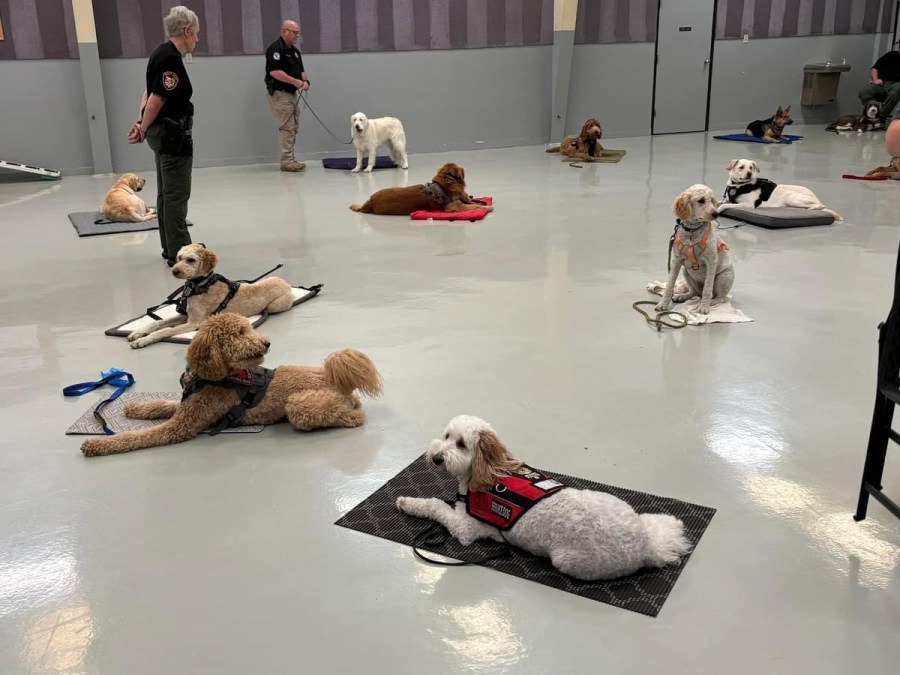

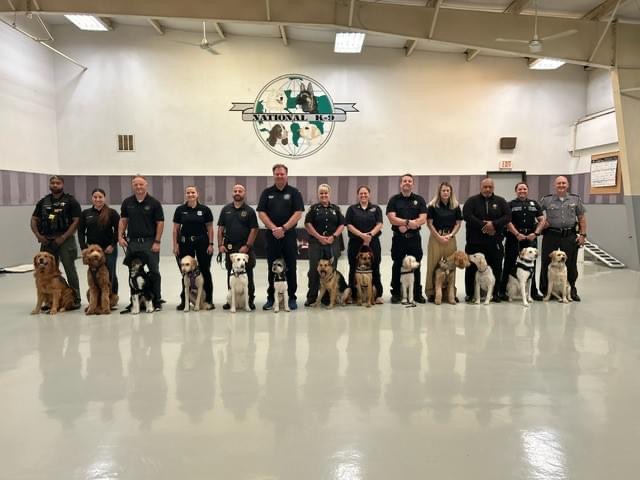
The dogs go through extensive obedience training, as well as “high-distraction” training, where they are desensitized to numerous noises and environments.
“Because of the things that we do in policing, they have to be able to hold commands in very, very demanding environments when there’s lights and sirens and gunshots and courtrooms where they might be on the stand for three to six hours at a time with the victim,” Metz said. “So our dogs are trained to the nth-degree, so I’m very, very confident in any dog that comes through our program is going to be able to perform well.”
The program is entirely funded by community partners, who donate money to vet care, grooming and equipment for the dogs. Partners include Franklin County Children’s Services, Nationwide Children’s Hospital and the Franklin County Prosecutor’s Office, according to the U.S. Department of Justice, as well as local restaurants and businesses.
“We have places and restaurants that do golf tournaments for us and raise money, and that money is utilized for our dogs’ equipment,” Metz said. “And one of the things that we always said is we wanted it to be a program that we wanted to provide to our community, not something our community had to pay for.”
As for what’s next, Sheriff Dallas Baldwin said he hopes to have the “largest therapy dog program in the country,” not for bragging rights, but to continue helping others.
“We’ve seen that time and time again in my career where you go on a run, you go to a traumatic event and there’s a gap, there’s a void,” Baldwin said. “You want to do something for the people that are suffering and you have nothing you could do. … These therapy dogs have really filled in that need in a lot of cases. It’s just been spectacular, and to be able to expand that and continue that program and share it with others is what we’re about.”