With its backcourt weakened by a player being held out in connection with a gambling scandal, Dayton signed a 22-year-old point guard who led the Dutch and Belgian leagues in assists last year.
That sentence pretty well sums up the current state of affairs in college basketball, where eligibility is limited largely only by one’s imagination and coaching staffs are getting as creative as ever to add talent. No longer is recruiting done when the fall semester begins or even when the season starts: Coaches now are increasingly looking for second-semester solutions to plug holes after injuries, suspensions or even to just push slumping starters.
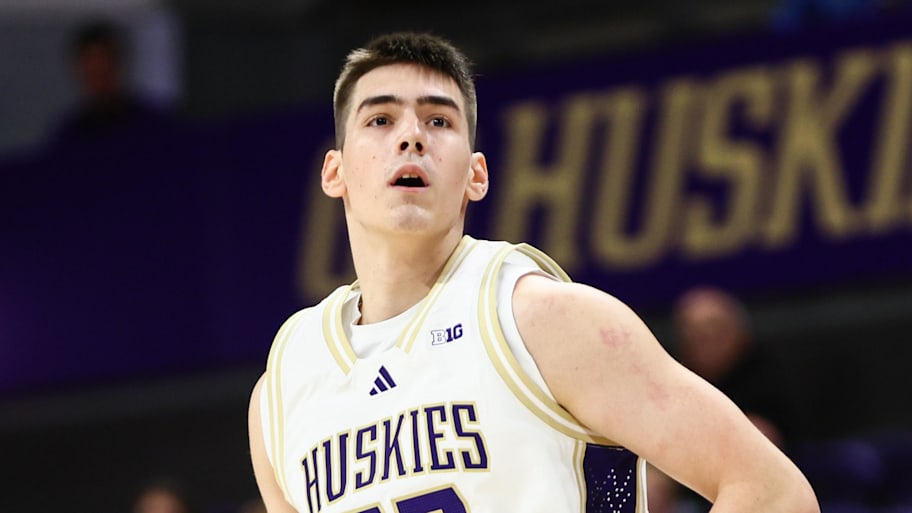
Sean Pouedet, the aforementioned midseason arrival for Dayton, is expected to make his college debut soon, only two months removed from his last professional start. Nikola Dzepina, a Serbian forward who signed with Washington in the wake of a pair of preseason frontcourt injuries, scored five points in his first collegiate action Saturday against Southern Utah. Ole Miss added T.J. Clark, a former G League guard who most recently played professionally in Mexico, over the weekend and he’s expected to suit up this season. And based on conversations with sources around the college hoops landscape, at least 10 other high-major teams have kicked the tires on midseason options as well as a smattering of schools at lower levels.
“We need another body,” USC head coach Eric Musselman said Sunday after a win over Washington State. “The semester ends on Wednesday. If we can somehow get another player, I’d like to get that done, too, if we can make that happen.”
All this represents a significant uptick in activity compared to just a few years ago, when the very rare midseason adds were almost always redshirting players who either graduated high school early or came from the southern hemisphere and finished school in the winter. But as the NCAA has relaxed eligibility requirements and allowed more former professional players to join the college ranks, the pool of players potentially available has grown exponentially. Most midyear additions will come from Europe, though a few could be former G Leaguers like Clark and Abdullah Ahmed at BYU (who could play right away or redshirt) taking advantage of that newfound loophole.
According to Jon Chepkevich, who advises college teams on recruiting as the director of scouting at DraftExpress, many of the players began the process of coming to the U.S. months ago when teams around the country were looking internationally to round out their rosters. Whether due to transcript trouble, issues getting out of their pro contract or just money drying up in the college market, many punted college plans to 2026 but kept the door open to come midseason. And as college teams see new needs pop up by December after key early injuries, sometimes it makes sense to circle back. If some of the logistical hurdles have already been taken care of, it’s possible to fast-track a process that usually takes weeks or months and get a player to the U.S. at the semester break.
“Most of the time you’re hoping that the agent has put the player’s transcripts and everything through the [NCAA] eligibility center and gotten that taken care of ahead of time,” Chepkevich said. “If not, it’s definitely a tough ask to try to jam that all in. Usually there’s at least some foresight on the agent’s side of the equation to have things locked and loaded and ready to go ahead of December.”
The financial market for midyear additions isn’t as strong as it was for similar players in the spring or summer, but some teams still have some flexibility to make a financial splash. And given how much more lucrative college basketball is right now than most other options for 18 to 22-year-olds, even with less leverage it’s still usually a net-positive financial decision to head to college. Chepkevich also points out that many of the deals teams are looking to sign with midseason additions would be 16-to-18-month contracts that lock the player in for 2026–27 as well, with the added bonus that a two-year deal may allow the school to get creative and backload a deal to make up for not having much money left for this season to pay the player now.
“With the level of desperation for some schools, they can figure out a way to drum up some additional funds or structure a deal with a kicker to really elevate their earnings heading into 2026–27,” Chepkevich said.
With most schools wrapping up the fall semester in the last week or in the next few days, the window has officially opened for teams to push through an additional piece. Any signing would need to be in place by the start of the spring semester, though players enrolling for spring can start suiting up as soon as fall semester comes to an end. But given the time it takes to finalize the details of these arrangements, it’s hard to envision many players being added once conference play takes hold after the new year. That said, it wouldn’t be a shock if when all is said and done, we see 20 to 25 players joining teams between semesters, with many playing in games from the moment they arrive. It’s a trend that coaching staffs will be closely monitoring and has already prompted at least one team Sports Illustrated spoke with to plan on holding a roster spot to use in situations like this.
Should we be expecting star additions midseason that completely shake up league races? Chepkevich is skeptical, saying he thinks most top talents will keep their recruitments in the traditional spring and summer, allowing them to have a more robust list of suitors. But that doesn’t mean these in-season adds can’t make an impact. In Dayton and Washington’s cases, both lost players expected to be in the rotation and the schools now added an extra piece to plug in off the bench. One ACC school that has investigated the midseason market said its primary aim was simply finding an extra practice body who could be put into a game in a pinch. Even situations like that, which end up serving as essentially three-month trial periods, can make sense on both parties.
“Everyone is incentivized to make it happen if there’s an appealing situation in college where they can play and have a meaningful role,” Chepkevich said. “Or even just get to the U.S., get acclimated for a few months in an NCAA atmosphere, and then survey their options in the portal come spring.”
More College Basketball from Sports Illustrated
Listen to SI’s college sports podcast, Others Receiving Votes, below or on Apple and Spotify. Watch the show on SI’s YouTube channel.
This article was originally published on www.si.com as Midseason Additions Are Reshaping How College Basketball Teams Build Rosters.