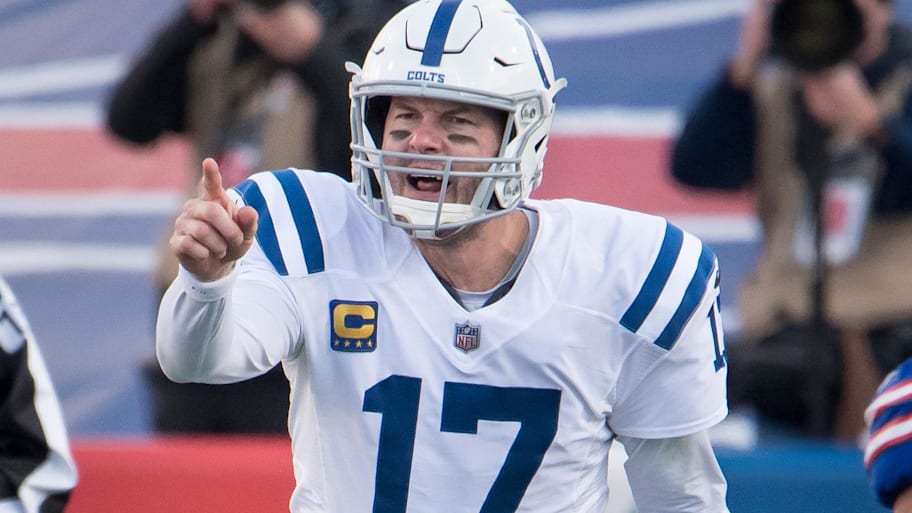
Stuck at EverBank Stadium, and waiting for a new charter home with mechanical issues sending the team plane in for repairs, Colts coach Shane Steichen and GM Chris Ballard were staring down a quarterback situation in apparent disrepair.
Starter Daniel Jones, already playing through a fractured fibula, had sustained a season-ending torn Achilles hours earlier, in what became a blowout loss to the Jaguars. Then, in the locker room postgame, rookie sixth-rounder Riley Leonard—who’d put together an admirable, hope-provoking three quarters—revealed to coaches the pain he felt in a knee that he tweaked during the second half.
Former first-rounder Anthony Richardson, who underwent orbital surgery in late October after a freak accident with a resistance band, was already shelved with no timetable for return. Veteran Brett Rypien was stashed on the practice squad. The Colts, quite simply, were long on problems and short on answers at the game’s most important position.
“What about Rivers?” Steichen asked, in the bowels of the stadium.
Ballard, taken aback, responded, “Would he do it?”
And thus began a wild 48 hours that brought eight-time Pro Bowl quarterback Philip Rivers, a veteran of 17 NFL seasons, back to pro football after a five-year retirement.
No one has outsized expectations on how this will all play out. The Colts aren’t going to saddle Rivers with salvaging their 8–5 season, which was so promising until the most recent three-game losing streak. For now, they’re anxious to see what he looks like on the practice field on Wednesday, as they start preparing for Sunday’s showdown with the 10–3 Seahawks in Seattle.
But what Rivers can give them, and more specifically their locker room, is some semblance of hope in the wake of a catastrophic Sunday in North Florida, and a truckload of energy and enthusiasm for the game, with four regular-season dates left on their 2025 schedule.
From that standpoint, Steichen and Ballard know exactly what they’re getting.
Steichen’s relationship with Rivers was born in his first NFL season, 2011, in the San Diego Chargers’ lunchroom, as the young coach was getting his start as a defensive assistant for Norv Turner. Rivers heard Steichen running the scout team in practice, and could tell, by how the coach barked out his cadence, that he was a quarterback. So that day, Rivers and Steichen shot the breeze over Steichen’s playing days at UNLV, and a bond was born.
Turner was fired after 2012 and took Steichen to Cleveland, then Steichen returned to San Diego to work for Mike McCoy in 2014, this time on the offensive side. By 2016, Steichen was Rivers’s position coach. Midway through the 2019 season, Chargers head coach Anthony Lynn tabbed Steichen to become Rivers’s coordinator, based primarily on the strong relationship the two had built.
The next year, Rivers became a free agent, and Ballard signed him to a one-year deal in Indianapolis, reuniting him with Frank Reich and getting to see what Steichen had for eight seasons in San Diego and, after the team relocated, Los Angeles.
Steichen and Rivers kept in touch. And that dialogue never stopped.
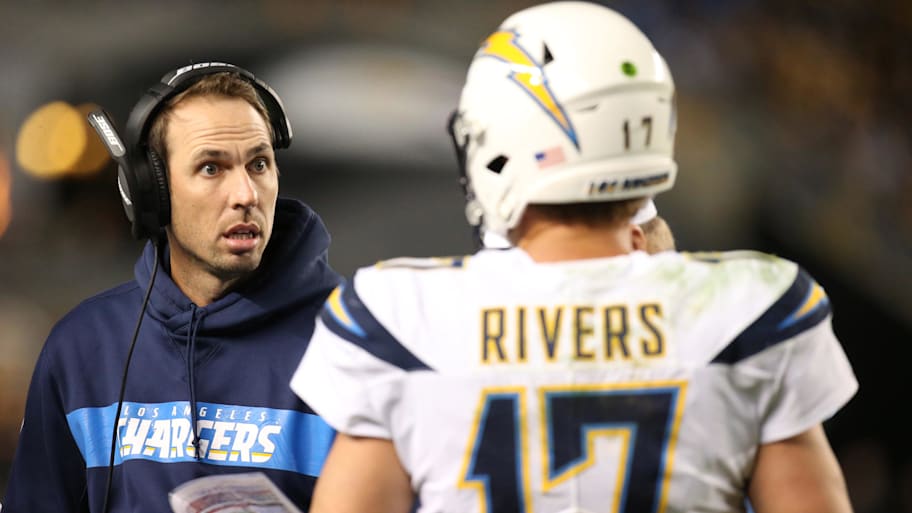
Steichen and Rivers stayed connected
The coach and quarterback talk twice a week, and that conversation over the years has evolved. They talk football. They talk life. They would exchange film, and laugh about how the Colts and the St. Michael Catholic schemes are so similar—Rivers has been the head coach for the past five seasons at the Fairhope, Ala., parochial school, where his eldest son, Gunner, is now a junior quarterback and blue-chip recruit.
How similar? Steichen could look at any number of concepts St. Michael was running and immediately identify the one-word call that those old Chargers would associate with it.
Rivers also stayed connected to the league, helping guys prepare for the draft, working with his friend David Morris’s Mobile-based business, QB Country. In recent years, Morris has brought his draft prospects to Rivers’s house once a week to throw and talk football, in the lead-up to the Senior Bowl and combine. In 2024, that group included Bo Nix and Drake Maye. Last year, Tyler Shough and, yes, Leonard himself were part of the crew.
At the end of those days at Rivers’s house, the old quarterback would bring the kids out back and have a quarterback competition that Rivers would routinely win. Part of it, those there would tell you, was the home-field advantage he had, throwing on his own yard into his own nets. But another was that, even when compared with quarterbacks in their early 20s who were headed for the pros, Rivers could still really sling it.
So, at a baseline, Steichen knew Rivers was running a simplified version of his offense, knew Rivers had been watching the Colts’ tape and knew Rivers could still throw it.
But did Rivers, at 44, actually have the appetite to reenter the brutal world of the NFL?
After landing in Indianapolis on Sunday night, Steichen and Ballard called Rivers to figure that out. Rivers told them, in so many words, that if he was going to do it, it’d probably be a good idea for him to come and throw for them first, and see how he felt. But he wanted to give it more thought, so they resolved to circle back Monday morning.
When they did, Rivers’s excitement wasn’t hard to pick up on.
“Let me get up there and throw it around a little bit,” he said, “and we’ll figure it out.”
The Colts sent the Irsay family plane to pick up Rivers at midday. He landed around 5 p.m. and soon thereafter was walking into the team facility he’d called home five years earlier, remarking quickly how the weight room had been renovated. They met for an hour in Ballard’s office, catching up and talking about the team and the season, before moving to the team’s field house at 7:30 p.m. for the throwing session.
Steichen and the offensive coaches had a 30-to-35-throw program for him, with practice squad receivers Coleman Owen and Eli Pancol, and a couple of equipment staffers to catch the ball for him. He threw shallow crosses. He threw deep overs. He threw go balls. They went through the whole route tree.
The ball was jumping off Rivers’s right hand. His feet were quick. He looked sharp.
Everything was checking out. Rivers, Ballard and Steichen met again for a couple of hours after the throwing session. Rivers felt good coming out of it, and asked the Colts to give him until noon Tuesday to make a final call. Meanwhile, Leonard—who’d told his coaches, after initially reporting the injury postgame, that he felt a little stiff coming off the plane—was trending in a positive direction, and had been apprised of the Rivers situation on Monday, and Rypien was elevated off the practice squad.
So the Colts were prepared for whatever Rivers decided. But they were also excited by the idea that he might go through with something they’d seen as a shot in the dark 24 hours earlier.
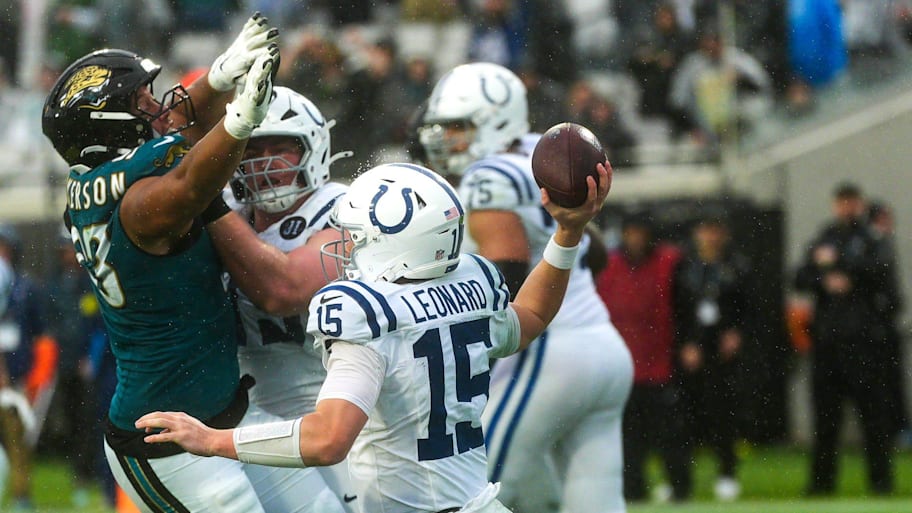
What’s next for Rivers and the Colts
With a few hours to spare, Rivers gave the Colts the thumbs up to sign him to the practice squad, and he was in the facility putting the new weight room to use. Steichen caught Rivers afterward watching tape, and immediately locked in like his career never ended.
Rivers and the coaches spent Tuesday going through first and second down, then breaking, then going through the protection plan, then breaking, then going through third down.
Maybe most amazing was how quickly Rivers’s switch flipped. At one point, in going through a few of the Colts’ games to catch himself up, he picked up on what a defense was trying to do to Indy, and immediately said how Indy needed, in that spot, to get to a certain protection and then throw a swing pass to Jonathan Taylor in the flat.
Of course, that part you would expect. Rivers isn’t just the proverbial coach on the field anymore. He’s literally a coach, and one with nearly two decades of NFL playing experience.
The bigger questions from here will relate to the stuff the Colts couldn’t possibly test by handing Rivers the clicker in the meeting room, or giving him a pair of shorts and a ball and having him throw in an empty indoor facility on a Monday night.
Rivers has kept himself in good shape, but that’s different than being in football shape. How his timing and instincts will show up in the pocket, first in practice and then under live fire in a game setting after such a long layoff, is an open question, too, and one that won’t be answered until he actually does it. It’s also hard to know how his body will respond to hits.
As such, with so little history of something like this happening—Steve DeBerg is probably the closest comp, but when he came back in Atlanta at age 44, after five years away, he got a full training camp to prepare—there’s still a ton of unknown ahead.
But at the very least, an Indy team dealing with a lot (and still processing the loss of Jones) should get a spark. And having Rivers around, even for a month, should be good for every young player in that building.
And the mystery, from here, becomes the cool part.
The first step there will be taken on the practice field. That’s where the coaches will figure out whether Rivers is their best option for Sunday, with Leonard getting better (and potentially ready to practice), and Rypien coming out of the bullpen. From there, if he is, and if he starts in Seattle, then we’ll all get to see something that’s never quite been done before.
That, in itself, makes this a really good story.
And who knows? Maybe Rivers can go out there and make it an even better one.
More NFL on Sports Illustrated
This article was originally published on www.si.com as Inside the 48 Hours When the Colts Lured Philip Rivers Out of Retirement.